
CONTACT US for a free quote
Plan Your Medical Procedure with Our Dedicated Care Team

Excellent reviews

1500+ Happy Clients

Free cost indication
Oops! Something went wrong while submitting the form.

Get world-class care at vetted and accredited hospitals in Thailand.
Save up to 80% with internationally trained surgeons and state-of-the-art facilities.
Heart valve replacement surgery restores proper blood flow when one or more of your heart's four valves no longer opens or closes correctly. Left untreated, valve disease can lead to heart failure, stroke, or sudden cardiac death.
Thailand has become a leading destination for this procedure. You'll find experienced cardiac surgeons who perform hundreds of valve replacements each year, hospitals with cutting-edge technology like TAVI (transcatheter aortic valve implantation), and costs up to 85% lower than Western countries. Many patients combine their treatment with a peaceful recovery in Bangkok or Chiang Mai.
This guide covers everything you need to know about getting heart valve replacement surgery in Thailand, from hospital-by-hospital pricing to planning your medical trip.
Please note that the prices provided are estimations and may vary based on various factors. Additionally, these prices do not include flights or accommodation.
All prices are in USD, unless otherwise indicated.
Your heart has four valves (aortic, mitral, tricuspid, and pulmonary) that control blood flow between chambers and to your lungs and body. When a valve becomes stenotic (narrowed) or regurgitant (leaky), the heart works harder to pump blood, eventually weakening the muscle.
Heart valve replacement involves removing the damaged valve and replacing it with either a mechanical valve (made from durable materials like titanium) or a biological valve (made from animal or human tissue). Mechanical valves last decades but require lifelong blood thinners. Biological valves don't need blood thinners but typically last 10-20 years.
Common valve problems that may require replacement include aortic stenosis (often from aging or calcium buildup), mitral regurgitation (frequently caused by rheumatic fever or valve prolapse), and less commonly, pulmonary or tricuspid valve disease. Your cardiologist determines if repair is possible or if replacement is necessary based on the valve's condition, your age, and overall health.
Modern techniques include both traditional open-heart surgery and minimally invasive options. TAVI or TAVR (transcatheter aortic valve replacement) allows surgeons to replace the aortic valve through a small catheter inserted via the groin, avoiding the need to open the chest entirely.
Contact Konkai for current pricing.
Bumrungrad operates a dedicated Heart Valve Center with specialists trained in both traditional and minimally invasive valve replacement. The hospital performs TAVI procedures, MitraClip for mitral regurgitation, and conventional valve replacements for all four heart valves. Their cardiothoracic surgeons have completed fellowships at institutions like Stanford and have decades of experience treating complex valve disease.
Learn more about Bumrungrad International Hospital →
Contact Konkai for current pricing.
MedPark's Cardiology Center features professor-level cardiovascular surgeons with international training. Dr. Taweesak Chotivatanapong, one of Thailand's pioneers in heart valve repair, invented the Autologous Pericardium Ring for valve reconstruction and has trained cardiac surgeons across Southeast Asia. The hospital offers TAVI, minimally invasive cardiac surgery (MICS), and traditional open-heart approaches in JCI-standard hybrid operating theaters.
Learn more about MedPark Hospital →
Contact Konkai for current pricing.
The Praram 9 Cardiovascular Institute employs 31 specialized cardiologists providing care around the clock. The hospital has built a reputation for complex cardiac procedures over three decades and performs valve repairs and replacements for congenital, rheumatic, and degenerative valve disease. Their cardiac surgery program includes both traditional and catheter-based approaches.
Learn more about Praram 9 Hospital →
Several factors influence your total cost. The type of valve matters: biological tissue valves typically cost more than mechanical valves upfront. The surgical approach plays a role too. Minimally invasive procedures and TAVI often carry higher equipment costs but shorter hospital stays, while traditional open-heart surgery may require longer ICU time.
Your specific valve replacement also impacts pricing. Single valve replacements (aortic or mitral) cost less than double or triple valve procedures. Additional factors include pre-operative testing, ICU days, surgeon fees, anesthesia, and cardiac rehabilitation.
Prices shown are estimates based on typical cases. Contact Konkai for personalized quotes from hospitals that match your medical needs and budget. We'll provide detailed breakdowns including all hospital fees, surgeon costs, and post-operative care.
The aortic valve controls blood flow from your heart to the rest of your body. Aortic stenosis (narrowing) is the most common reason for replacement. Traditional surgery involves opening the chest and placing a new valve while your heart is temporarily stopped. TAVI offers a catheter-based alternative, especially for older patients or those at high surgical risk.
Located between the left atrium and ventricle, the mitral valve most often develops regurgitation (leaking). While repair is preferred when possible, severe damage or calcification may require replacement. Mitral regurgitation caused by rheumatic fever often needs replacement due to extensive scarring. Minimally invasive approaches through small chest incisions are increasingly common.
The pulmonary valve controls blood flow to your lungs. Replacement is less common and typically needed for congenital heart disease or complications from previous cardiac surgery. Catheter-based pulmonary valve replacement has become available for select patients, avoiding open-heart surgery.
The tricuspid valve, located between the right atrium and ventricle, rarely requires isolated replacement. When needed, it's usually due to rheumatic disease, endocarditis, or as part of multi-valve surgery. Repair is almost always attempted first.
Not all valve problems require replacement. When structurally sound valve tissue remains, repair may be possible and often preferred.
Valve repair involves reshaping or reinforcing your existing valve. Surgeons might trim prolapsed leaflets, insert annuloplasty rings to tighten the valve opening, or replace damaged chordae. Repair works best for mitral and tricuspid valves, particularly in mitral regurgitation cases. Benefits include preserving your natural tissue, no need for blood thinners with mechanical valves, and better long-term outcomes in many cases.
Valve replacement becomes necessary when tissue is too damaged, calcified, or destroyed to repair effectively. This is common in severe aortic stenosis, extensively diseased mitral valves, or valves damaged by infection (endocarditis). Replacement guarantees a functioning valve but requires choosing between mechanical (durable, needs blood thinners) and biological (no blood thinners needed, limited lifespan) options.
Your cardiac surgeon evaluates which approach suits you during pre-operative assessment. Age matters: younger patients often get mechanical valves for longevity, while older patients may receive biological valves to avoid blood thinners. Some patients who thought they needed replacement discover during surgery that repair is possible.
For detailed information about valve repair procedures, see our guide on heart valve repair.
Total trip duration: 14-21 days minimum
Heart valve replacement requires careful pre-operative evaluation and adequate post-surgical monitoring before you can safely fly home. Unlike simpler procedures, you cannot schedule surgery immediately upon arrival.
Week 1 - Evaluation:
Week 2 - Surgery and Early Recovery:
Week 3+ - Recovery and Clearance:
Some patients may require 3-4 weeks before receiving flight clearance, particularly if complications arise or if healing progresses slower than expected. Your surgical team will make the final decision about travel safety.
Heart valve replacement cannot be combined with elective cosmetic or non-cardiac procedures. However, if you have multiple cardiac issues, surgeons may address them simultaneously. Common combinations include:
These decisions are made during your pre-operative evaluation based on comprehensive cardiac imaging. Never assume multiple procedures are possible without surgical team approval.
Pre-vetted facilities chosen by our team that meet our rigorous standards for quality and safety
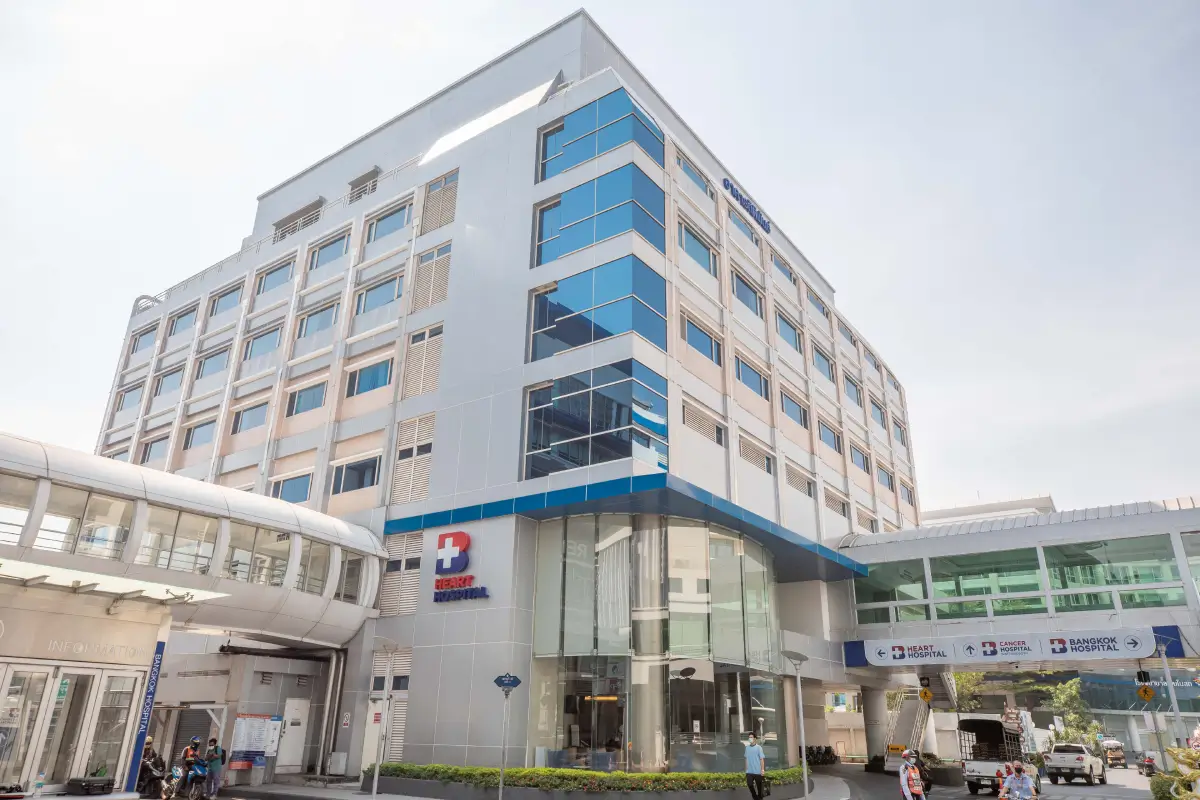
Bangkok Heart Hospital is Thailand's first dedicated private heart hospital, operating 95 cardiovascular beds on the Bangkok Hospital campus in central Bangkok. Established in 2005 under the BDMS network, it handles around 400 outpatient visits daily with a team of 70+ cardiovascular physicians. JCI-accredited since 2007 with Clinical Care Program Certification for acute coronary syndrome and heart failure, the hospital serves patients from across Asia and the Middle East.

Bumrungrad International Hospital opened in 1980 and is one of the largest private hospitals in Southeast Asia, with 580 beds and 62 clinics and centres on a single Sukhumvit campus. It was the first hospital in Asia accredited by Joint Commission International, in February 2002. Newsweek has ranked it the No. 1 hospital in Thailand for six consecutive years, and 96th of the world's 250 best hospitals in 2026.

Praram 9 Hospital is a 300-bed private hospital in Bangkok that has been providing advanced healthcare since 1992. JCI-accredited since 2010, the hospital is recognized for complex medical procedures including kidney transplants, cardiac surgery, and brain surgery. Having performed over 1,000 kidney transplants, it ranks as Thailand's leading private hospital for this specialty and was named 9th among Thailand's top hospitals by Newsweek in 2025.

MedPark Hospital is a 25-story tertiary care facility in Bangkok that opened in 2020, offering 550 beds and 300 examination rooms. Over 350 healthcare specialists, with 70% holding overseas qualifications, provide care across 30+ specialties. JCI-accredited in 2023 and ranked 6th best hospital in Thailand by Newsweek 2025, MedPark specializes in cardiac care, oncology, orthopedics, and neurology with advanced equipment including PET-CT, MRI 3 Tesla, and hybrid operating theaters.

Heart valve replacement in Thailand typically ranges from $18,000 to $32,000, depending on the valve type (mechanical vs. biological), surgical approach (open vs. minimally invasive or TAVI), and which hospital you choose. This represents savings of 80-85% compared to US prices ($170,000-$200,000) and 60-70% compared to UK and Australian costs. The estimate includes surgeon fees, hospital stay, ICU care, and basic cardiac rehabilitation. Contact Konkai for personalized quotes from hospitals that match your specific valve condition and budget.
Plan for a minimum of 10-14 days. This includes 1-2 days of pre-operative assessment, the surgery day, 7-10 days of hospital recovery (including 2-3 days in cardiac ICU), and a few days for final outpatient check-ups before traveling home. Patients who undergo minimally invasive procedures may have slightly shorter stays. Your cardiac surgeon determines when you're cleared to fly, typically 2-3 weeks after surgery depending on your procedure and recovery progress.
Thailand's top cardiac hospitals maintain the same safety standards as leading Western facilities. Hospitals like Bumrungrad, MedPark, and Praram 9 hold Joint Commission International (JCI) accreditation, which requires meeting rigorous international protocols for surgical safety, infection control, and patient outcomes. Thai cardiac surgeons often complete fellowships at renowned institutions in the US, Australia, and Europe, and many have decades of experience performing hundreds of valve replacements annually. Konkai only works with accredited hospitals that have proven track records in complex cardiac surgery.
Coverage varies by insurance policy. Some international health insurance plans cover treatment abroad, while US Medicare typically does not. We recommend checking with your insurance provider about international coverage and getting pre-authorization if your policy allows foreign medical procedures. Konkai and our partner hospitals can provide detailed invoices and medical documentation to submit to your insurer.
Bumrungrad International Hospital operates a dedicated Heart Valve Center and offers the full range of valve procedures including TAVI and MitraClip. MedPark Hospital features renowned surgeons like Dr. Taweesak Chotivatanapong and cutting-edge hybrid operating rooms. Praram 9 Hospital's Cardiovascular Institute has 31 cardiac specialists and extensive experience with complex valve disease. All three are JCI-accredited with internationally trained surgeons. The "best" hospital depends on your specific valve condition, preferred surgical approach, and surgeon expertise. Konkai helps match you with the right facility and surgeon for your case.
Yes, surgeons often perform combined procedures when clinically indicated. Common combinations include double or triple valve replacements, valve replacement with coronary artery bypass grafting (CABG), or closure of atrial septal defects during valve surgery. Combining procedures extends operating time but requires only one recovery period. Your cardiac surgeon evaluates whether combined procedures are appropriate based on your overall cardiac health and surgical risk. This decision is made during pre-operative assessment in Thailand.
You don't need a referral from your home doctor to receive cardiac care in Thailand, though we recommend consulting your cardiologist before traveling. Sharing your medical records, recent echocardiograms, cardiac catheterization results, and current medications helps Thai surgeons prepare for your arrival. If you plan to submit claims to insurance, check whether your policy requires pre-authorization for international treatment. Konkai assists with gathering and translating medical documents to send to Thai hospitals before your trip.


Pam and Konkai Health were absolute rock stars in helping us find a fantastic surgeon for my boyfriend's hip replacement in Thailand. We had previously paid for a service to help us find a doctor and it was just throwing money away. The paid service was slow to respond and only offered us quotes for the most expensive hospitals.
Pam on the other hand was a completely free service and was always quick to reply, patient with all of our questions, and presented a variety of options in our price range. She made the entire process of finding a doctor, setting up video conferences, and scheduling the surgery extremely easy. She continued to help us even after the surgery had taken place with follow up visits and final questions we had before traveling back home. We cannot recommend her highly enough!!! We will definitely be using her again for our next surgical needs.

The service has been great facilitating and making arrangements for my procedure. They are very quick with responses and answering questions.
Many thanks to Konkai. After an online inquiry Konkai guided me to Praram9 orthopedic for a consultation on a hip injury. I had the consultation, clearly a femeral head collapse and needing the hip joint replacement. The beauty was in a half day full consultation, x-ray, ekg, blood work, chest exam ... everything needed to proceed with surgery was done.
This was so professionally and efficiently done, all questions answered, no consultants, no referrals etc., all in house, all guided around the hospital. A friendly caring class act. So I then came back to Konkai to setup for the operation, with the same orthopedic team led by Dr. Peerapong that made the assessment. I returned 2 weeks later, admitted, had the replacement operation stayed 5 days with the hospital team, and quite frankly, it was a privilege to be in their care.
Now after 10 days recovery in Bangkok i am ready to return home. Why Thailand, well in my country New Zealand, you get passed around to specialists, consultants, it all takes time, does not engender trust, and i think the profit motive is primary like the American system. Further, there are less facilities so more waiting for slots. Thailand has a care culture, and the expertise and professionalism with Konkai and Praram9 is superb. They have top quality facilities and capacity to fit your schedule.
If i ever need any major surgery, this will be my first stop. Thanks again
"Whilst searching for information on getting my cataracts done, I found that most websites do not provide sufficient information. I was fortunate enough to find Konkai.Health and connect with Pam.
She and other members of Konkai go far and beyond to do everything possible to give you the best advice.
I highly recommend this company for health related matters whilst you are in Thailand. Real five star assistance."
Outstanding. The most safe, amazing communication these past couple of months with Pam from Konkai health. I asked soooo many questions there must be around 80+ emails from me and every single one has been replied in full. Even now 2 weeks after surgery. Super professional, and the surgeon Dr Thawatchai Boonpadhanapong, at Yanhee Hospital that Pam recommended to me for a breast implant removal, were just incredible. No money deposits asked for…just pure care.
The service and systems at Yanhee were out the gate. I am so glad I travelled all that way and didn’t do it in New Zealand as I don’t think it would’ve been as good haha. I was so looked after by the amazing nurses, anaesthetist, Dr Thawatchai and my interpreter Mr Wing. It’s overwhelming looking for the right fit and if it wasn’t for Konkai Health and Pam I wouldn’t be feeling as happy as I am now 2 weeks after my surgery. I cannot thank you enough for what feels like a life transformation :)
I came to Thailand from America for a liposuction in last week. In a Google search, back in May, I came across Konkai Health and decided to reach out to them.For my surgery Pam, recommended Rattinan Clinic out of Bangkok. Pam was able to connect me with the clinic to set up a consultation. The process was very easy.I recommend Konkai Health and Rattinan Clinic. Both are 10/10
"I live in New Zealand, and my partner and I went on a holiday in Laos (Asia). I became sick and needed an emergency stomach operation. I reached out to this company, and they have been nothing but helpful.
They helped us with translating in Laos; they organised a taxi driver who was waiting for us at arrival and drove us to the hospital, where they organised a scan for me. I only needed to show my passport and an email when I arrived. I was already in the system for the appointment.
Everything went really smoothly. The company is professional and reliable, and the staff is super friendly too. I would highly recommend this company. I am grateful for the great service this company offered when I was in need."

"I can say that the whole medical journey was very pleasant. The information given before the actual start was good. The meeting and intake with the doctor was clear.
Konkai Health was always responding fast and helpful if I came up with questions. And the actual surgery had a good outcome also. Now I just ended my last check-up, and I am very delighted how everything went."
Pam from Konkai just made the right match for my plastic surgery, not only did it make me safe time, but the chosen doctor was just exceeding my expectations! Thank you so muxh 🙏🏼
I highly recommend their expertise and thankful for having been a patient at Yanhee hospital! …
I am recommended by one of my friends in Bangkok that eye surgery at LASIK hospital is excellently and exceptionally done. With his recommendation, I approached Konkai who were quick to respond to my questions and give appointment date.





.svg)

.png)
