
CONTACT US for a free quote
Plan Your Medical Procedure with Our Dedicated Care Team

Excellent reviews

1500+ Happy Clients

Free cost indication
Oops! Something went wrong while submitting the form.

Get world-class care at vetted and accredited hospitals in Thailand.
Save up to 80% with internationally trained surgeons and state-of-the-art facilities.
Tubal ligation is a permanent contraceptive surgery that blocks or seals the fallopian tubes, preventing eggs from reaching the uterus for fertilization. Women choose this procedure when they're certain they don't want future pregnancies, though reversal is possible if circumstances change.
Thailand offers tubal ligation at accredited hospitals with experienced gynecological surgeons at costs 50-70% lower than Western countries. The procedure can be scheduled within days, requires minimal time off work, and patients can recover in comfortable hotel accommodations near the hospital.
This guide covers costs at partner hospitals in Thailand, surgical techniques, trip planning logistics, and what to expect during your stay.
Please note that the prices provided are estimations and may vary based on various factors. Additionally, these prices do not include flights or accommodation.
All prices are in USD, unless otherwise indicated.
1. No referral required, same-week scheduling. Book a consultation directly with a gynecological surgeon without GP referral. Most hospitals can schedule your consultation within 2-3 days and perform the procedure within the same week if you're medically cleared.
2. Experienced OB-GYN surgeons at JCI-accredited hospitals. Partner hospitals like Bumrungrad International Hospital and Praram 9 Hospital employ board-certified gynecologists trained internationally. Many have performed thousands of tubal ligations using minimally invasive techniques.
3. Affordable costs without insurance restrictions. Pay $1,500-$3,000 for the complete procedure including surgeon fees, hospital stay, anesthesia, and follow-up appointments. No insurance pre-authorization needed, no coverage denials for voluntary sterilization.
4. Discreet, judgment-free care. Thailand's private hospitals serve international patients seeking reproductive healthcare without the administrative hurdles or social pressure sometimes encountered in home countries. Childfree women and younger patients receive the same respectful treatment as anyone else.
Tubal ligation blocks or seals the fallopian tubes so eggs released from the ovaries cannot meet sperm. The procedure doesn't affect your menstrual cycle, hormone levels, or sexual function. You'll continue having periods and reaching menopause at the same age you would have otherwise.
The surgery is considered permanent birth control. While tubal ligation reversal exists, success rates vary depending on which technique was used and how much of the tube was removed. If you think you might want biological children in the future, consider long-acting reversible contraception like IUDs instead.
Tubal ligation is over 99% effective at preventing pregnancy. Fewer than 1 in 100 women become pregnant in the first year after the procedure, and the failure rate remains low over time.
Tubal ligation costs in Thailand range from $1,500 to $3,000 depending on the hospital, surgical technique, and whether it's performed as a standalone procedure or immediately following childbirth.
Price Range: 70,000-100,000 THB (~$2,000-$2,850 USD)
Bumrungrad offers tubal ligation as a standalone laparoscopic procedure or as an add-on during cesarean delivery. The hospital's women's health department includes over 50 OB-GYN specialists, many U.S. board-certified with fellowships from American institutions.
JCI-accredited since 2002, Bumrungrad treats over 1.1 million patients annually from 190 countries. The hospital ranks as Thailand's top facility in Newsweek's 2025 World's Best Hospitals list.
Learn more about Bumrungrad International Hospital →
Price Range: 60,000-90,000 THB (~$1,700-$2,550 USD)
Praram 9 specializes in complex women's health procedures and fertility treatments. Their gynecological surgery team uses minimally invasive laparoscopic techniques whenever possible, reducing recovery time to 3-5 days.
JCI-accredited since 2010, the hospital is recognized for kidney transplants, cardiac surgery, and reproductive medicine. Newsweek ranked Praram 9 as Thailand's 9th best hospital in 2025.
Learn more about Praram 9 Hospital →
Price Range: 55,000-85,000 THB (~$1,550-$2,400 USD)
Phyathai 3's Women's Health Center treats over 600,000 patients annually with a dedicated team of OB-GYN surgeons. The hospital offers same-day consultation and surgery scheduling for straightforward cases, making it efficient for medical tourists with limited time.
Part of the BDMS hospital group (Asia-Pacific's largest private hospital network), Phyathai 3 maintains A-HA accreditation from the Thai Ministry of Public Health.
Learn more about Phyathai 3 Hospital →
Surgical technique: Laparoscopic procedures cost slightly more than minilaparotomy due to specialized equipment, but recovery is faster.
Timing: Postpartum tubal ligation (performed 1-2 days after vaginal delivery or during cesarean section) costs less than interval tubal ligation (performed when you're not pregnant).
Hospital tier: Premium hospitals like Bumrungrad charge more but offer English-speaking staff, international patient coordinators, and hotel-like amenities.
All quoted prices include surgeon fees, anesthesiologist fees, hospital room (usually 1 night), medications, and one follow-up appointment within 7-10 days.
Pricing Disclaimer: These are 2025 estimates based on partner hospital price lists. Contact Konkai Health for current quotes from multiple facilities.
Thailand's private hospitals primarily use laparoscopy for tubal ligation, though minilaparotomy and postpartum techniques are also available.
The surgeon makes one or two small incisions (5-10mm) near the belly button and inserts a laparoscope (thin camera). Specialized instruments seal the fallopian tubes using clips, rings, or cauterization (burning).
Pros: Minimal scarring, faster recovery (3-5 days), same-day discharge possible, lower infection risk.
Cons: Requires general anesthesia, slightly higher cost than minilaparotomy.
Most commonly used for interval tubal ligation when the woman is not pregnant or postpartum.
A small incision (2-3 inches) is made in the lower abdomen. The surgeon pulls each fallopian tube through the incision, removes a small section, and ties off the ends.
Pros: Direct visualization of tubes, can be done with local anesthesia plus sedation, slightly lower cost.
Cons: Larger scar, longer recovery (5-7 days), higher infection risk than laparoscopy.
Less common in Thailand's private hospitals but available if you prefer to avoid general anesthesia.
Performed 1-2 days after vaginal delivery or during cesarean section while you're already in the hospital. The uterus is still enlarged, bringing the fallopian tubes closer to the abdominal surface for easier access.
Pros: Convenient timing (one hospital stay covers delivery and sterilization), lower total cost, tubes are easier to access.
Cons: Must be planned in advance, decision made during emotionally intense time, potential regret if decided hastily.
Most Thailand hospitals require counseling and signed consent at least 2-4 weeks before your due date if you want postpartum tubal ligation.
We provide free coordination for tubal ligation in Thailand:
Contact us for hospital recommendations and current pricing. We respond within 1 business day.
Pre-vetted facilities chosen by our team that meet our rigorous standards for quality and safety

Bumrungrad International Hospital opened in 1980 and is one of the largest private hospitals in Southeast Asia, with 580 beds and 62 clinics and centres on a single Sukhumvit campus. It was the first hospital in Asia accredited by Joint Commission International, in February 2002. Newsweek has ranked it the No. 1 hospital in Thailand for six consecutive years, and 96th of the world's 250 best hospitals in 2026.

Praram 9 Hospital is a 300-bed private hospital in Bangkok that has been providing advanced healthcare since 1992. JCI-accredited since 2010, the hospital is recognized for complex medical procedures including kidney transplants, cardiac surgery, and brain surgery. Having performed over 1,000 kidney transplants, it ranks as Thailand's leading private hospital for this specialty and was named 9th among Thailand's top hospitals by Newsweek in 2025.
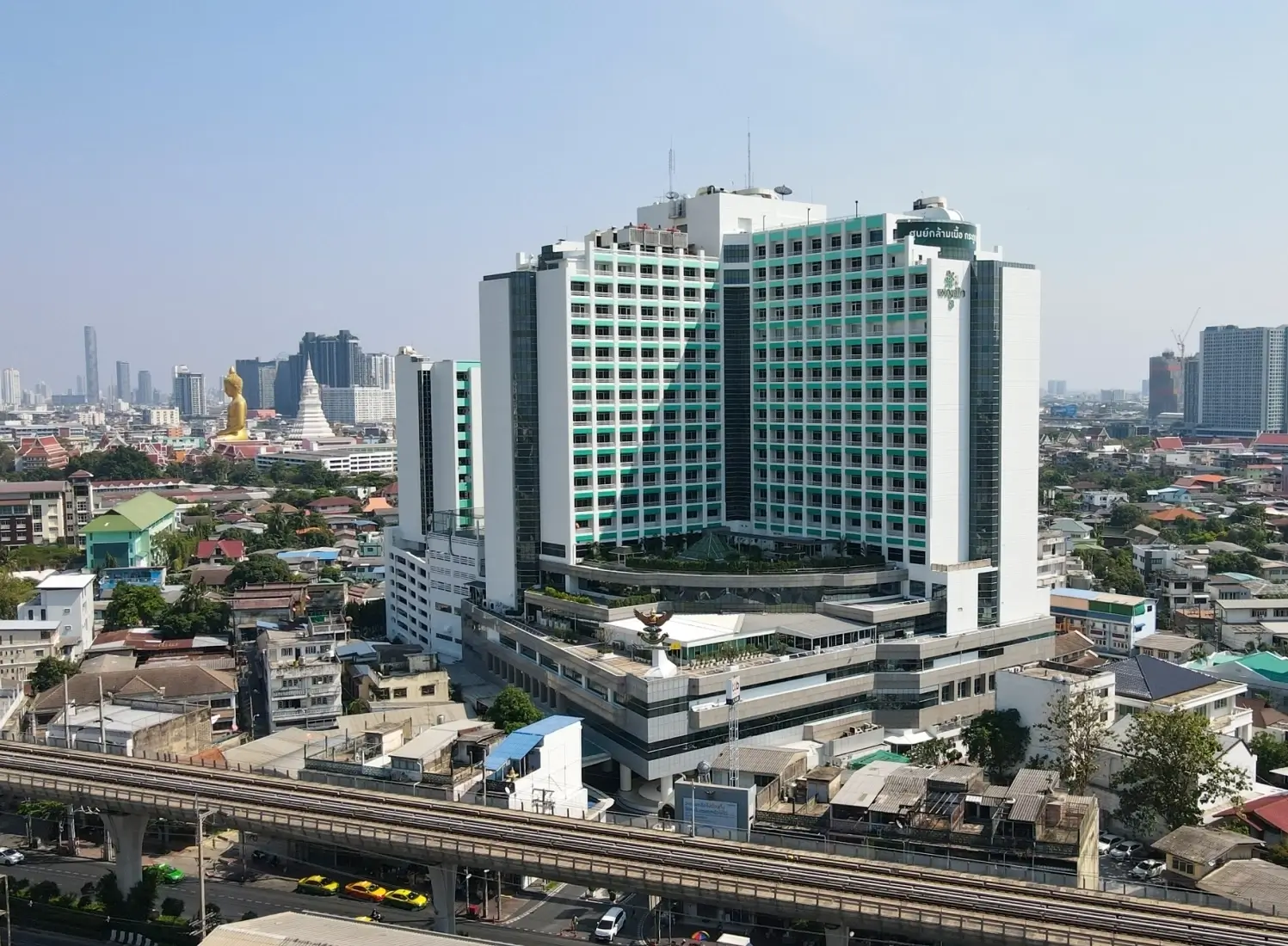
Phyathai 3 Hospital is a 300-bed private hospital in Bangkok's Thonburi area, established in 1996 and serving over 600,000 patients annually. Part of the BDMS group, the largest private hospital group in Asia pacific, the hospital is recognized for four specialized centers: Women's Health, Child and Adolescent Health (the largest in Southeast Asia), Heart Center, and Brain and Nervous System Center with advanced minimal invasive surgeries.
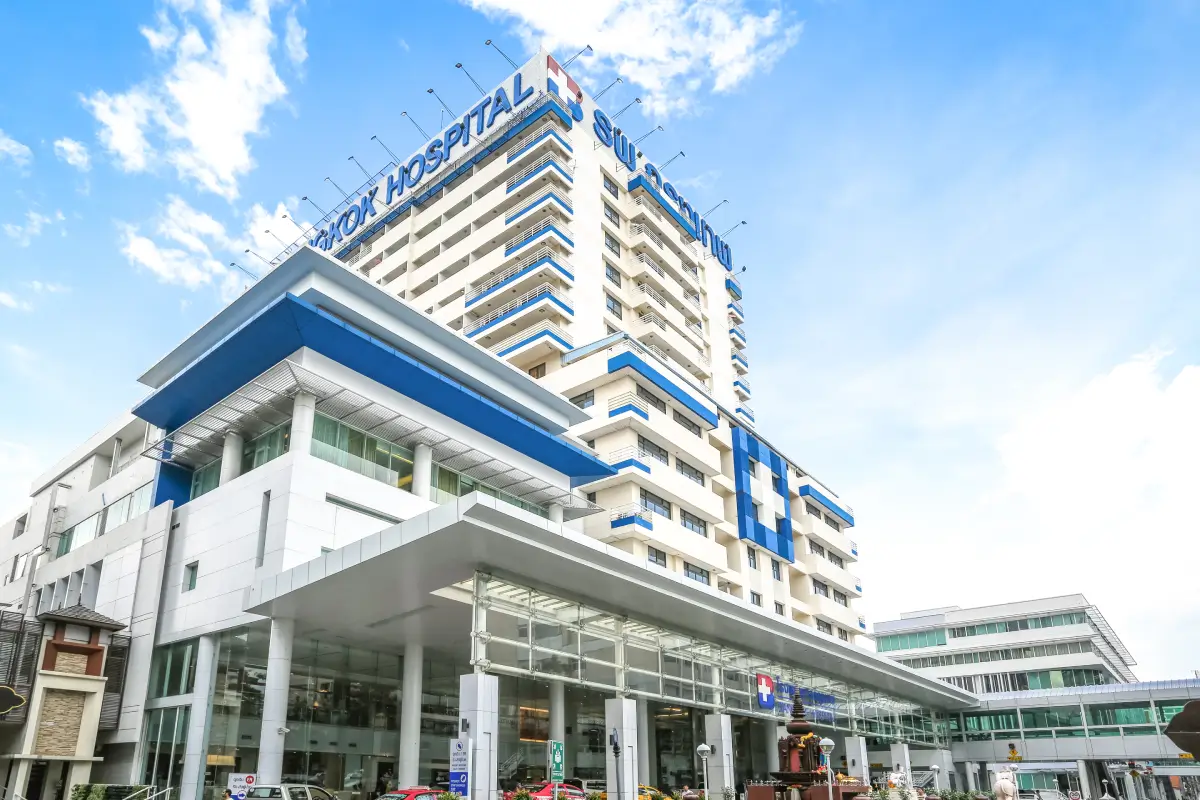
Bangkok Hospital is a 488-bed tertiary care hospital in Bangkok, founded in 1972 as one of Thailand's first private hospitals. As the flagship facility of Bangkok Dusit Medical Services (BDMS), Thailand's largest private hospital network, Bangkok Hospital offers comprehensive medical services across 30+ specialized departments with over 1,200 physicians. JCI-accredited with six consecutive certifications, the hospital is recognized by Newsweek as one of Thailand's best hospitals for three consec

The cost for a tubal ligation reversal in Thailand typically ranges from approximately USD 2,000 to USD 3,000. Please note that this is an estimate and actual costs can vary based on specific factors such as the patient's individual circumstances and the clinic or surgeon's fees.


Pam and Konkai Health were absolute rock stars in helping us find a fantastic surgeon for my boyfriend's hip replacement in Thailand. We had previously paid for a service to help us find a doctor and it was just throwing money away. The paid service was slow to respond and only offered us quotes for the most expensive hospitals.
Pam on the other hand was a completely free service and was always quick to reply, patient with all of our questions, and presented a variety of options in our price range. She made the entire process of finding a doctor, setting up video conferences, and scheduling the surgery extremely easy. She continued to help us even after the surgery had taken place with follow up visits and final questions we had before traveling back home. We cannot recommend her highly enough!!! We will definitely be using her again for our next surgical needs.

The service has been great facilitating and making arrangements for my procedure. They are very quick with responses and answering questions.
Many thanks to Konkai. After an online inquiry Konkai guided me to Praram9 orthopedic for a consultation on a hip injury. I had the consultation, clearly a femeral head collapse and needing the hip joint replacement. The beauty was in a half day full consultation, x-ray, ekg, blood work, chest exam ... everything needed to proceed with surgery was done.
This was so professionally and efficiently done, all questions answered, no consultants, no referrals etc., all in house, all guided around the hospital. A friendly caring class act. So I then came back to Konkai to setup for the operation, with the same orthopedic team led by Dr. Peerapong that made the assessment. I returned 2 weeks later, admitted, had the replacement operation stayed 5 days with the hospital team, and quite frankly, it was a privilege to be in their care.
Now after 10 days recovery in Bangkok i am ready to return home. Why Thailand, well in my country New Zealand, you get passed around to specialists, consultants, it all takes time, does not engender trust, and i think the profit motive is primary like the American system. Further, there are less facilities so more waiting for slots. Thailand has a care culture, and the expertise and professionalism with Konkai and Praram9 is superb. They have top quality facilities and capacity to fit your schedule.
If i ever need any major surgery, this will be my first stop. Thanks again
"Whilst searching for information on getting my cataracts done, I found that most websites do not provide sufficient information. I was fortunate enough to find Konkai.Health and connect with Pam.
She and other members of Konkai go far and beyond to do everything possible to give you the best advice.
I highly recommend this company for health related matters whilst you are in Thailand. Real five star assistance."
Outstanding. The most safe, amazing communication these past couple of months with Pam from Konkai health. I asked soooo many questions there must be around 80+ emails from me and every single one has been replied in full. Even now 2 weeks after surgery. Super professional, and the surgeon Dr Thawatchai Boonpadhanapong, at Yanhee Hospital that Pam recommended to me for a breast implant removal, were just incredible. No money deposits asked for…just pure care.
The service and systems at Yanhee were out the gate. I am so glad I travelled all that way and didn’t do it in New Zealand as I don’t think it would’ve been as good haha. I was so looked after by the amazing nurses, anaesthetist, Dr Thawatchai and my interpreter Mr Wing. It’s overwhelming looking for the right fit and if it wasn’t for Konkai Health and Pam I wouldn’t be feeling as happy as I am now 2 weeks after my surgery. I cannot thank you enough for what feels like a life transformation :)
I came to Thailand from America for a liposuction in last week. In a Google search, back in May, I came across Konkai Health and decided to reach out to them.For my surgery Pam, recommended Rattinan Clinic out of Bangkok. Pam was able to connect me with the clinic to set up a consultation. The process was very easy.I recommend Konkai Health and Rattinan Clinic. Both are 10/10
"I live in New Zealand, and my partner and I went on a holiday in Laos (Asia). I became sick and needed an emergency stomach operation. I reached out to this company, and they have been nothing but helpful.
They helped us with translating in Laos; they organised a taxi driver who was waiting for us at arrival and drove us to the hospital, where they organised a scan for me. I only needed to show my passport and an email when I arrived. I was already in the system for the appointment.
Everything went really smoothly. The company is professional and reliable, and the staff is super friendly too. I would highly recommend this company. I am grateful for the great service this company offered when I was in need."

"I can say that the whole medical journey was very pleasant. The information given before the actual start was good. The meeting and intake with the doctor was clear.
Konkai Health was always responding fast and helpful if I came up with questions. And the actual surgery had a good outcome also. Now I just ended my last check-up, and I am very delighted how everything went."
Pam from Konkai just made the right match for my plastic surgery, not only did it make me safe time, but the chosen doctor was just exceeding my expectations! Thank you so muxh 🙏🏼
I highly recommend their expertise and thankful for having been a patient at Yanhee hospital! …
I am recommended by one of my friends in Bangkok that eye surgery at LASIK hospital is excellently and exceptionally done. With his recommendation, I approached Konkai who were quick to respond to my questions and give appointment date.





.svg)

.png)
