
CONTACT US for a free quote
Plan Your Medical Procedure with Our Dedicated Care Team

Excellent reviews

1500+ Happy Clients

Free cost indication
Oops! Something went wrong while submitting the form.

Get world-class care at vetted and accredited hospitals in Thailand.
Save up to 80% with internationally trained surgeons and state-of-the-art facilities.
Hysterectomy surgery, the removal of the uterus, is a medical procedure often chosen by women dealing with conditions like uterine fibroids, endometriosis, or cancer. Choosing to undergo a hysterectomy is a major decision, and doing so in Thailand can offer several advantages.
Thailand has emerged as a trusted destination for hysterectomy surgery, with JCI-accredited hospitals performing thousands of procedures annually using minimally invasive laparoscopic and robotic techniques. Experienced gynecological surgeons at hospitals in Thailand complete hysterectomies for conditions including fibroids, endometriosis, adenomyosis, and cancer, and international patients from the UK, US, and Australia choose Thailand for cost savings combined with immediate scheduling and no waiting lists.
Hysterectomy costs $3,000-$7,000 in Thailand depending on surgical approach and surgery appointments are available within 2-3 weeks at hospitals with dedicated Women's Health Centers. The complete procedure from consultation to follow-up takes 10-14 days, allowing efficient medical travel without extended time away from home.
Please note that the prices provided are estimations and may vary based on various factors. Additionally, these prices do not include flights or accommodation.
All prices are in USD, unless otherwise indicated.
Hysterectomy removes the uterus (womb), and depending on medical necessity may also include removal of the cervix, fallopian tubes, or ovaries. This procedure treats conditions causing chronic pain, excessive bleeding, or life-threatening complications.
The surgery ends menstruation permanently and eliminates pregnancy capability. Women who have not reached menopause will enter menopause immediately if ovaries are removed during surgery (called oophorectomy), though ovary removal is not always necessary and depends on individual medical circumstances.
Hysterectomy treats several conditions. Uterine fibroids are non-cancerous growths causing heavy bleeding, pelvic pressure, and pain. Endometriosis occurs when uterine lining tissue grows outside the uterus, causing severe pelvic pain and potential infertility. Adenomyosis happens when endometrial tissue grows into uterine muscle walls, causing painful, heavy periods. Uterine prolapse occurs when pelvic floor muscles weaken and the uterus drops into the vaginal canal. Endometrial, cervical, or ovarian cancer may require hysterectomy as primary treatment or cancer prevention in high-risk patients. Abnormal uterine bleeding that doesn't respond to medication or other treatments may also require surgical intervention.
Total Hysterectomy (most common):Removes the entire uterus including the cervix. This is the standard hysterectomy type performed for most conditions including fibroids, endometriosis, and heavy bleeding. Pap smears are no longer needed after total hysterectomy since the cervix is removed.
Cost in Thailand: $3,500-$6,000 depending on surgical approach
Partial/Subtotal Hysterectomy:Removes the upper portion of the uterus while leaving the cervix intact. Less commonly performed today, though some patients prefer preserving the cervix believing it maintains better pelvic support or sexual function. Patients still require regular Pap smears post-surgery.
Cost in Thailand: $3,000-$5,500
Radical Hysterectomy:Removes the entire uterus, cervix, upper portion of vagina, and surrounding tissues and lymph nodes. Performed primarily for cervical or endometrial cancer treatment when cancer has spread beyond the uterus. This extensive surgery requires longer recovery time (8-12 weeks) and carries higher complication risks.
Cost in Thailand: $6,000-$9,000
Hysterectomy with Bilateral Salpingo-Oophorectomy (BSO):Removes uterus, both fallopian tubes, and both ovaries. Performed for ovarian cancer, severe endometriosis affecting ovaries, or as cancer prevention in high-risk patients (BRCA gene carriers). Removing ovaries before natural menopause triggers immediate surgical menopause with potential hot flashes, mood changes, and bone density concerns.
Cost in Thailand: $4,000-$7,500
Abdominal Hysterectomy:Surgeon makes 5-7 inch horizontal or vertical incision across lower abdomen. This traditional approach provides best visibility for complex cases like large fibroids, extensive endometriosis, or cancer staging. Recovery takes 6-8 weeks with larger scar and longer hospital stay (3-5 days).
Advantages: Best for complex cases, allows thorough examination of abdominal cavity, handles large fibroids effectivelyDisadvantages: Longer recovery, larger scar, more post-operative pain, higher infection risk
Cost in Thailand: $3,000-$5,000
Vaginal Hysterectomy:Uterus removed through vaginal incision, leaving no visible external scars. Faster recovery (3-5 weeks) and less pain than abdominal approach. Only suitable when uterus is not significantly enlarged and no extensive pelvic adhesions present. Cannot examine abdominal cavity or address endometriosis outside uterus.
Advantages: No external scars, faster recovery, less pain, shorter hospital stay (1-2 days)Disadvantages: Not suitable for large uteri or when examining other pelvic organs needed
Cost in Thailand: $3,500-$5,500
Laparoscopic Hysterectomy:Minimally invasive approach using 3-4 small (0.5-1cm) incisions. Surgeon uses laparoscope (camera) and specialized instruments to remove uterus through small incisions or vagina. Recovery takes 2-4 weeks with minimal scarring. Allows examination and treatment of endometriosis or adhesions throughout pelvis.
This approach combines benefits of minimal scarring with ability to address complex pelvic conditions. Most suitable for moderately sized uteri and patients wanting faster return to normal activities.
Advantages: Small scars, faster recovery than abdominal, ability to treat endometriosis, reduced blood lossDisadvantages: Longer surgery time than abdominal, requires specialized surgical skill
Cost in Thailand: $4,500-$6,500
Robotic-Assisted Hysterectomy:Uses da Vinci robotic surgical system providing surgeon with enhanced 3D visualization and precise instrument control. Particularly beneficial for complex cases requiring detailed dissection around bladder, ureters, or blood vessels. Recovery similar to laparoscopic (2-4 weeks) but with even greater precision for challenging anatomy.
Hospitals like Bumrungrad and MedPark in Bangkok offer robotic surgery for patients with prior pelvic surgeries, severe endometriosis, or anatomical challenges.
Advantages: Maximum precision, excellent for complex cases, reduced surgeon fatigue allowing better outcomesDisadvantages: Higher cost, longer surgery time, requires specialized equipment
Cost in Thailand: $6,000-$8,000
Bumrungrad International Hospital operates Southeast Asia's largest private hospital Women's Center with 60+ Ob/Gyn specialists. The hospital performs thousands of gynecological surgeries annually including hysterectomies using all surgical approaches from traditional abdominal to advanced robotic-assisted techniques.
Hysterectomy Capabilities:
Pricing: Contact Konkai for current pricing quotes from Bumrungrad. As a premium international hospital with central Bangkok location and extensive patient services, pricing typically reflects these additional amenities.
Patient Profile: International patients seeking premium facilities, patients with complex medical histories, those preferring robotic-assisted surgery
MedPark Hospital opened in 2020 as state-of-the-art facility with 550 beds and advanced surgical technology. The Women's Health Center uses latest equipment including robotic surgery systems.
Hysterectomy Capabilities:
Pricing: Contact Konkai for current MedPark pricing quotes and package details.
Patient Profile: Patients wanting newest surgical technology, those seeking modern hospital environment, patients interested in single-incision techniques
Weeks 1-2 (Pre-Arrival): Contact Konkai Health to receive hospital options, pricing quotes, and surgical date availability. Most hospitals schedule consultations within 3-5 days of inquiry and surgery within 2-3 weeks. Earlier surgical dates possible for urgent medical cases or cancer treatment.
Submit medical records including recent Pap smear results (if cervix intact), pelvic ultrasound imaging, blood work results, and medication lists. Hospitals review records to confirm surgical candidacy and identify any pre-operative requirements.
Book flights and accommodation near chosen hospital. Konkai provides hotel recommendations within 5-10 minutes of hospital facilities.
Day 1-2 (Arrival in Bangkok):Comprehensive gynecological consultation including pelvic examination, discussion of surgical approach options, anesthesia consultation, and pre-operative instructions. Blood tests, EKG, chest X-ray completed same day if not provided in advance.
Surgeon explains surgical technique details, expected hospital stay duration, recovery timeline, and potential complications specific to your medical history. This is opportunity to ask questions about ovary preservation, hormone replacement therapy needs, and sexual function post-surgery.
Day 3 (Surgery Day):Arrive hospital 2-3 hours before scheduled surgery time for pre-operative preparation. IV line placed, anesthesia team reviews plan, nursing staff prepares surgical site.
Surgery duration: 1-2 hours for straightforward abdominal or vaginal hysterectomy, 2-3 hours for laparoscopic or robotic approaches, 3-4 hours for radical hysterectomy with lymph node removal.
Abdominal Hysterectomy: Hospital stay 3-5 days. Patients begin walking short distances day after surgery to prevent blood clots. Pain managed with oral medications. Abdominal incision checked daily for infection signs. Diet advances from liquids to solid foods as bowel function returns (typically 2-3 days post-surgery).
Vaginal/Laparoscopic/Robotic Hysterectomy: Hospital stay 1-2 days. Less pain than abdominal approach allows faster mobilization. Patients often discharged day after surgery if pain well-controlled, urinating normally, and tolerating food.
Physical therapist provides guidance on safe movement patterns, proper lifting technique (no lifting >5kg for 6 weeks), and pelvic floor exercises to prevent prolapse. Nursing staff teaches incision care, warning signs of infection (fever, increased pain, redness, discharge), and medication schedules.
You will be discharged if you meet the criteria including stable vital signs, adequate pain control with oral medications, ability to urinate, tolerance of solid foods, and understanding of home care instructions.
Patients stay in Bangkok 10-14 days total for follow-up appointments and initial recovery monitoring before international travel. This period crucial for identifying complications like infections, blood clots, or internal bleeding while still having immediate hospital access.
Days 8-10: First follow-up appointment includes incision check, pelvic examination (for vaginal hysterectomy), blood work, and review of recovery progress. Surgeon confirms healing appropriate for stage and provides clearance for increased activity levels.
Days 11-14: Final follow-up before international travel. Surgeon removes any remaining sutures (most dissolve on own), performs final pelvic exam, reviews long-term recovery expectations, and provides medical documentation for home healthcare providers. Clearance given for air travel with advice on movement during flight (walk every 1-2 hours, compression stockings recommended).
While the costs can vary depending on individual circumstances, hysterectomy surgery in Thailand is typically more affordable than in many Western countries. This cost-effectiveness, combined with the high standard of care, makes Thailand an appealing destination for this procedure.
The cost for a hysterectomy surgery in Thailand typically ranges from approximately USD 3,000 to USD 6,000.
The total cost can vary depending on several factors, including the complexity of the surgery and the specifics of your medical condition. Typically, the cost will cover the surgeon's fee, hospital stay, anesthesia, and other related medical services.
Pre-vetted facilities chosen by our team that meet our rigorous standards for quality and safety

Bumrungrad International Hospital opened in 1980 and is one of the largest private hospitals in Southeast Asia, with 580 beds and 62 clinics and centres on a single Sukhumvit campus. It was the first hospital in Asia accredited by Joint Commission International, in February 2002. Newsweek has ranked it the No. 1 hospital in Thailand for six consecutive years, and 96th of the world's 250 best hospitals in 2026.

MedPark Hospital is a 25-story tertiary care facility in Bangkok that opened in 2020, offering 550 beds and 300 examination rooms. Over 350 healthcare specialists, with 70% holding overseas qualifications, provide care across 30+ specialties. JCI-accredited in 2023 and ranked 6th best hospital in Thailand by Newsweek 2025, MedPark specializes in cardiac care, oncology, orthopedics, and neurology with advanced equipment including PET-CT, MRI 3 Tesla, and hybrid operating theaters.

Praram 9 Hospital is a 300-bed private hospital in Bangkok that has been providing advanced healthcare since 1992. JCI-accredited since 2010, the hospital is recognized for complex medical procedures including kidney transplants, cardiac surgery, and brain surgery. Having performed over 1,000 kidney transplants, it ranks as Thailand's leading private hospital for this specialty and was named 9th among Thailand's top hospitals by Newsweek in 2025.
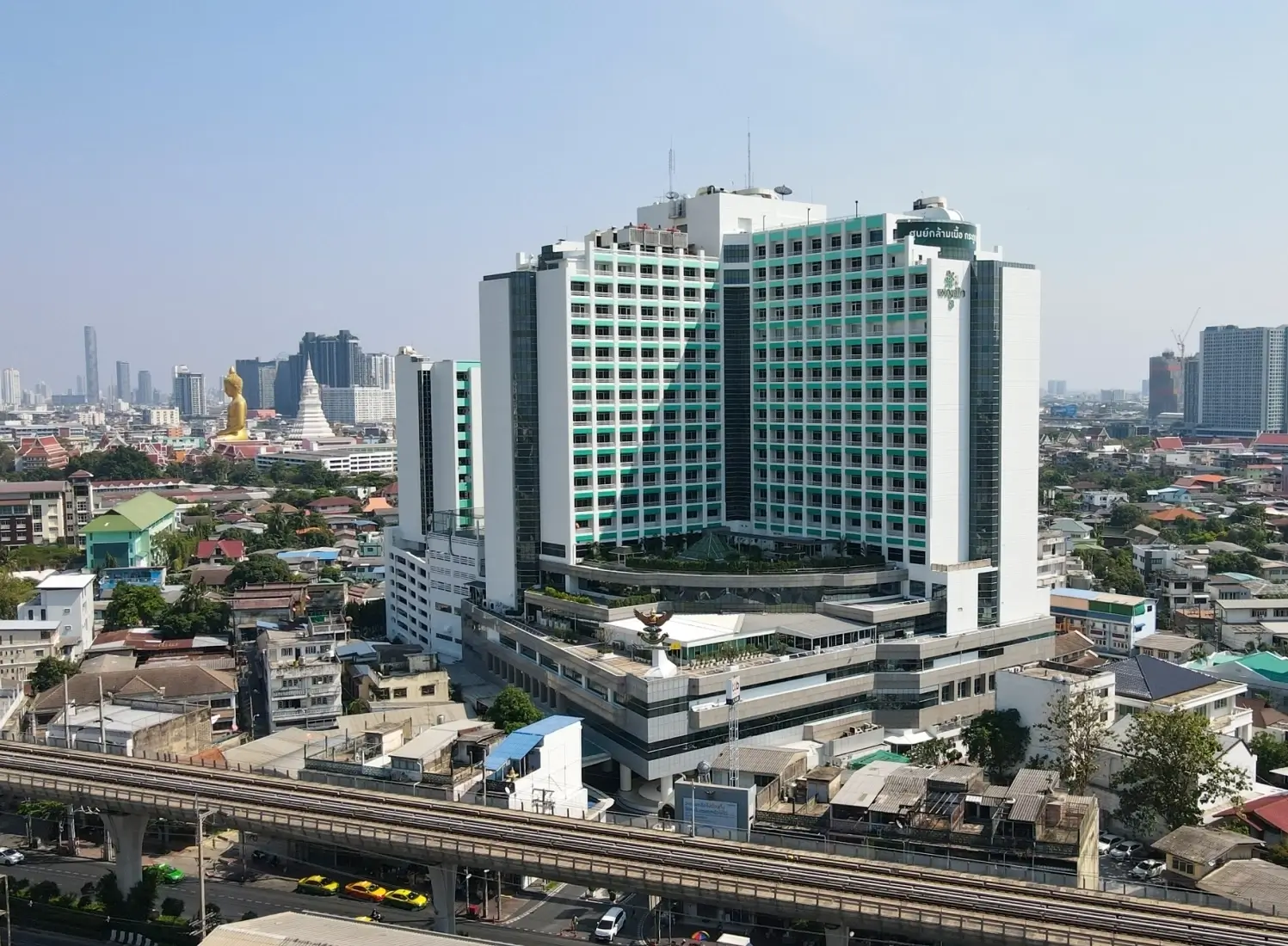
Phyathai 3 Hospital is a 300-bed private hospital in Bangkok's Thonburi area, established in 1996 and serving over 600,000 patients annually. Part of the BDMS group, the largest private hospital group in Asia pacific, the hospital is recognized for four specialized centers: Women's Health, Child and Adolescent Health (the largest in Southeast Asia), Heart Center, and Brain and Nervous System Center with advanced minimal invasive surgeries.

Hysterectomy costs $3,000-$7,000 in Thailand depending on surgical approach and complexity. Abdominal hysterectomy ranges $3,000-$5,000, vaginal hysterectomy $3,500-$5,500, laparoscopic hysterectomy $4,500-$6,500, and robotic-assisted hysterectomy $6,000-$8,000. Radical hysterectomy for cancer treatment costs $6,000-$9,000.
Pricing includes surgery, anesthesia, operating room, hospital stay (1-5 days depending on approach), medications, and initial follow-up appointments. Doctor consultation fees ($150-300) are typically separate. Contact Konkai for verified pricing quotes from partner hospitals.
Recovery time depends on surgical approach. Vaginal and laparoscopic hysterectomy recovery takes 2-4 weeks before resuming normal activities and 4-6 weeks before exercise or heavy lifting. Abdominal hysterectomy recovery takes 4-6 weeks for normal activities and 6-8 weeks for exercise. Hospital stay ranges 1-2 days (laparoscopic/vaginal) to 3-5 days (abdominal). Total Thailand stay is 10-14 days including surgery, hospital recovery, and follow-up appointments before international travel. Most patients return to desk work 2-3 weeks post-surgery (laparoscopic) or 4-5 weeks (abdominal).
Plan 10-14 days total Thailand stay after hysterectomy. This includes 1-2 days pre-surgery for consultation and testing, 1-5 days hospital stay depending on surgical approach (laparoscopic 1-2 days, abdominal 3-5 days), and 5-10 days hotel recovery before international travel. Follow-up appointments occur at days 7-10 and days 11-14 to ensure appropriate healing before flying home. Surgeon confirms incision healing, reviews recovery progress, and provides clearance for air travel. Staying full 10-14 days allows identifying complications (infection, bleeding) while still having immediate hospital access rather than discovering problems after returning home.
Yes, gynecological surgeons commonly perform hysterectomy combined with related procedures in single surgery session where medically appropriate. Common combinations include hysterectomy plus ovarian cyst removal (oophorectomy), hysterectomy plus pelvic floor repair for prolapse, hysterectomy plus endometriosis excision throughout pelvis, or hysterectomy plus laparoscopic treatment of adhesions. Combining procedures reduces overall costs (single anesthesia, single hospital stay) and recovery time versus separate surgeries. Surgeon evaluates medical safety of combination procedures based on surgical complexity and your overall health status during consultation.


Pam and Konkai Health were absolute rock stars in helping us find a fantastic surgeon for my boyfriend's hip replacement in Thailand. We had previously paid for a service to help us find a doctor and it was just throwing money away. The paid service was slow to respond and only offered us quotes for the most expensive hospitals.
Pam on the other hand was a completely free service and was always quick to reply, patient with all of our questions, and presented a variety of options in our price range. She made the entire process of finding a doctor, setting up video conferences, and scheduling the surgery extremely easy. She continued to help us even after the surgery had taken place with follow up visits and final questions we had before traveling back home. We cannot recommend her highly enough!!! We will definitely be using her again for our next surgical needs.

The service has been great facilitating and making arrangements for my procedure. They are very quick with responses and answering questions.
Many thanks to Konkai. After an online inquiry Konkai guided me to Praram9 orthopedic for a consultation on a hip injury. I had the consultation, clearly a femeral head collapse and needing the hip joint replacement. The beauty was in a half day full consultation, x-ray, ekg, blood work, chest exam ... everything needed to proceed with surgery was done.
This was so professionally and efficiently done, all questions answered, no consultants, no referrals etc., all in house, all guided around the hospital. A friendly caring class act. So I then came back to Konkai to setup for the operation, with the same orthopedic team led by Dr. Peerapong that made the assessment. I returned 2 weeks later, admitted, had the replacement operation stayed 5 days with the hospital team, and quite frankly, it was a privilege to be in their care.
Now after 10 days recovery in Bangkok i am ready to return home. Why Thailand, well in my country New Zealand, you get passed around to specialists, consultants, it all takes time, does not engender trust, and i think the profit motive is primary like the American system. Further, there are less facilities so more waiting for slots. Thailand has a care culture, and the expertise and professionalism with Konkai and Praram9 is superb. They have top quality facilities and capacity to fit your schedule.
If i ever need any major surgery, this will be my first stop. Thanks again
"Whilst searching for information on getting my cataracts done, I found that most websites do not provide sufficient information. I was fortunate enough to find Konkai.Health and connect with Pam.
She and other members of Konkai go far and beyond to do everything possible to give you the best advice.
I highly recommend this company for health related matters whilst you are in Thailand. Real five star assistance."
Outstanding. The most safe, amazing communication these past couple of months with Pam from Konkai health. I asked soooo many questions there must be around 80+ emails from me and every single one has been replied in full. Even now 2 weeks after surgery. Super professional, and the surgeon Dr Thawatchai Boonpadhanapong, at Yanhee Hospital that Pam recommended to me for a breast implant removal, were just incredible. No money deposits asked for…just pure care.
The service and systems at Yanhee were out the gate. I am so glad I travelled all that way and didn’t do it in New Zealand as I don’t think it would’ve been as good haha. I was so looked after by the amazing nurses, anaesthetist, Dr Thawatchai and my interpreter Mr Wing. It’s overwhelming looking for the right fit and if it wasn’t for Konkai Health and Pam I wouldn’t be feeling as happy as I am now 2 weeks after my surgery. I cannot thank you enough for what feels like a life transformation :)
I came to Thailand from America for a liposuction in last week. In a Google search, back in May, I came across Konkai Health and decided to reach out to them.For my surgery Pam, recommended Rattinan Clinic out of Bangkok. Pam was able to connect me with the clinic to set up a consultation. The process was very easy.I recommend Konkai Health and Rattinan Clinic. Both are 10/10
"I live in New Zealand, and my partner and I went on a holiday in Laos (Asia). I became sick and needed an emergency stomach operation. I reached out to this company, and they have been nothing but helpful.
They helped us with translating in Laos; they organised a taxi driver who was waiting for us at arrival and drove us to the hospital, where they organised a scan for me. I only needed to show my passport and an email when I arrived. I was already in the system for the appointment.
Everything went really smoothly. The company is professional and reliable, and the staff is super friendly too. I would highly recommend this company. I am grateful for the great service this company offered when I was in need."

"I can say that the whole medical journey was very pleasant. The information given before the actual start was good. The meeting and intake with the doctor was clear.
Konkai Health was always responding fast and helpful if I came up with questions. And the actual surgery had a good outcome also. Now I just ended my last check-up, and I am very delighted how everything went."
Pam from Konkai just made the right match for my plastic surgery, not only did it make me safe time, but the chosen doctor was just exceeding my expectations! Thank you so muxh 🙏🏼
I highly recommend their expertise and thankful for having been a patient at Yanhee hospital! …
I am recommended by one of my friends in Bangkok that eye surgery at LASIK hospital is excellently and exceptionally done. With his recommendation, I approached Konkai who were quick to respond to my questions and give appointment date.





.svg)

.png)
